
A Valentine’s Day Reflection: The Heartbreak of Reductionism
A Valentine’s Day Reflection: The Heartbreak of Reductionism
By Todd DuBose, Ph.D.
I wish everyone a very happy Valentine’s Day, but the reality is that Valentine’s Day is usually mixed with a fluidity of conflicting emotions, memories and hopes. I know it is for me. That said, and felt, for better or for worse, the grip of medically-modeled ideology (e.g., existence is a physically deficient problem that needs to be corrected with medical intervention) has made its way even into romance and heartbreak.
Many people these days have heard of Takotsubo Syndrome, or “broken heart syndrome,” where acute stress from a loss can impact and stress the heart in such a way that looks physiologically like other cardiac illnesses and damage. I appreciate this kind of research and care as long as biology and meaning are in dialogue, not in a subjugated, causal relationship of the former causing the latter.
To this point, in a recent TED Talk, educator Shannon Odell, in a talk on “The Science of Falling in Love,”
https://www.ted.com/talks/shannon_odell_the_science_of_falling_in_love/transcript?user_email_address=c224cc2cc4774297bf1d314d7bc0fd3f , echoes the central agenda of contemporary health care professions, as well as one of the current National Institute of Mental Health’s strategic goals of “defining the brain mechanisms underlying complex behavior,” https://www.nimh.nih.gov/about/strategic-planning-reports. Granted I am referencing just a TED talk, and I wish Shannon a very happy V-day as well, but our culture’s sharing of information in everyday discourse and encounters is by way of TED talks, TikTok, Twitter, and other kinds of sound bite existence. So, I wanted to respond.
Odell notes:
The VTA (Ventral Tegmental Area) is the reward-processing and motivation hub of the brain, firing when you do things like eat a sweet treat, quench your thirst….Activation releases the “feel good” neurotransmitter dopamine, teaching your brain to repeat behaviors in anticipation of receiving the same initial reward. This increased VTA activity is the reason love's not only euphoric, but also draws you towards your new partner…. No matter the reason a relationship ends, we can blame the pain that accompanies heartbreak on the brain. The distress of a breakup activates the insular cortex, a region that processes pain— both physical, like spraining your ankle, as well as social, like the feelings of rejection. As days pass, you may find yourself once again daydreaming about or craving contact with your lost partner. The drive to reach out may feel overwhelming, like an extreme hunger or thirst. When looking at photos of a former partner, heartbroken individuals again show increased activity in the VTA, the motivation and reward center that drove feelings of longing during the initial stages of the relationship. This emotional whirlwind also likely activates your body’s alarm system, the stress axis, leaving you feeling shaken and restless.
Who would ever know pining for a loved one could be worded in such sexy ways! I have boldened points for consideration in this transcript. This is a perfect example, if not sine qua non example, of tangible-izing the intangible, in this case, love. We just can’t seem to let go of control, concretes and needing life to run in engineered algorithms, which continue to miss the invisibility of love and its meaning—including the unacknowledged love of control, concretes, and engineered algorithms!
Notice the sleight-of-hand throughout the opining, trading at will different categories and experiences as if interchangeable: heartbreak and rejection and sprained ankles, missing a lover and hunger/thirst, and so forth. Unwittingly, the inescapability and irreducibility of the intangibles shows up in the discourse anyway: If the brain “causes” we can’t “teach it”; causation does not “draw us towards” and isn’t a process of “longing.” What if one ends an abusive relationship? Celebration may very well replace longing.
The difference is not neurology but meaning. What if feeling shaken and restless is due to existential fears of being alone, unloved, or unlovable? What if someone would rather die trying to love than satisfying pleasure centers? Sacrifice, rather than satiation? Yes, VTA lights up when we love and hurt, but the mattering of how and why it does is intangible in itself, and just as influential on neurology as we are told is the other way around.
One would think with plasticity studies over the past several decades now that we would be done with seeing the brain as the Unmoved Mover. The brain is malleable and in dialogue with us, not causing us, but the tenacity of the Unmoved Mover ideology runs deep. Folks like myself and others thinking like me, are seen as too superstitious to let go of intangible dreams, grow up, and accept the neuro/material reduction, while I, and others with me, challenge the arrogance and myopia of the reductionist’s fundamentalism regarding the singular definitions of evidence, empiricism, that is transfused with fears of unknowing, uncertainty, uncontrollability, and the intangibles.
This is where our dialogue stalls and signals how much work is still ahead of us in guarding the intangibles, particularly love. So, today I wish others a kiss (and more I hope) that is not just the pressing together of epiderma, and the gift of dopamine and oxytocin as consequential gifts rather than causes of this human, all too human guest at the door, love.
 Todd DuBose, Ph.D., is an award winning Distinguished Full Professor at The Chicago School of Professional Psychology, as well as a licensed psychologist with over twenty years of teaching, supervising, and consulting experience, and over thirty years of clinical experience, including nine years as a former chaplain at the famed Bellevue Hospital in New York City. He holds degrees in contemporary continental and comparative philosophy of religion (B.A., Georgia State University; M.Div., Union Theological Seminary, NYC) and in human science clinical psychology (Ph.D., Duquesne University). He integrates these traditions in an existential-hermeneutical-phenomenological way of caring for others, specializing in extreme, limit or boundary events and their accompanying crises of meaning (e.g., violence, loss, trauma, psychosis, nihilism). He teaches regularly in international venues and has done so in twelve countries. His research and scholarship also focus on critiques of implicit biases in foundational ideologies of standardized practices of care, particularly the medical/disease model of engineering existence, that can intentionally or unwittingly harm others in the name of care. He is committed to the engaged practitioner, public scholar practice of community engagement and advocacy.
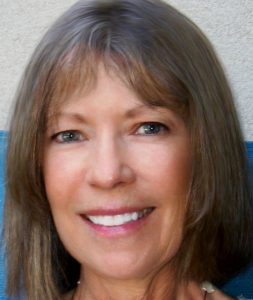 Dr. Jacqueline A. Sparks, social justice advocate, critical thinker extraordinaire, beloved university professor,
 EHPP's new Editor-in-Chief is Don Marks, Psy.D., Associate Professor and Director of Clinical Training at Kean University, NJ. He is a clinical health psychologist specializing in strategies for living with chronic pain and advanced illness. His work on psychological interventions for chronic pain has led to research regarding sport injury and athlete psychological well-being. He is also a marriage and family psychologist, working primarily with couples and families facing medical illness. Dr. Marks completed both the professional practicum and internship in mindfulness-based stress reduction (MBSR) at the Jefferson-Myrna Brind Center of Integrative Medicine of Thomas Jefferson University Hospitals. He completed his postdoctoral fellowship and served as a clinical instructor in psycho-oncology and palliative medicine at The Ohio State University Medical Center. He has been a member of the Association for Contextual Behavioral Science (ACBS) since 2005, and he has served as president of the organization's Greater New York chapter. Dr. Marks is the past Editor-in-Chief of the Journal of Clinical Sport Psychology.
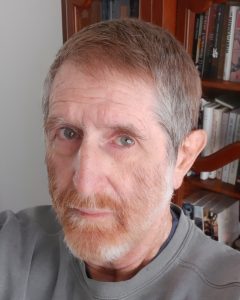 We are also excited to announce that Niall (Jock) McLaren, MBBS, FRANZCP, was selected as an Associate Editor of EHPP. He joins our current Associate Editor, Jim Tucker, Ph.D., in assisting Dr. Marks in continuing to make EHPP an important voice in the critical psychology and critical psychiatry field. Dr. McLaren is an Australian psychiatrist who recently retired after 50 years of practice. He is an Honorary Research Fellow in the Department of Philosophy at University of Queensland. He has published a number of monographs on the application of the philosophy of science to mental disorder, most recently with a fierce critique of the so-called "bio-psycho-social" model, showing how it is without substance. He lives in the rural outskirts of Brisbane with his family and keeps busy growing trees.


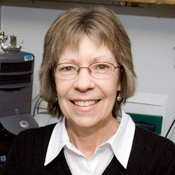 ISEPP Lifetime Achievement Award - for recognition of sustained and dedicated efforts made throughout one’s career in the struggle to overturn the medical model of human distress. Presented to Jacqueline Sparks, Ph.D.
  ISEPP Special Achievement Award
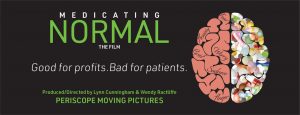 Mary Karon Memorial Award for Humanitarian Concerns
 Listen to ISEPP's Executive Director Dr. Chuck Ruby being interviewed about his ideas on the mental health industry on
 The
The  Act now to get your copies. Don't miss out on an opportunity to hear from some of the brightest thinkers in the field.