
Here Comes DSM-6!
Here Comes DSM-6!
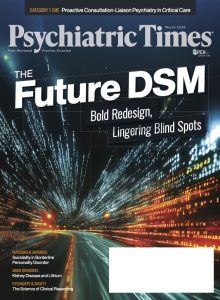 The American Psychiatric Association (APA) is going back to the drawing board and planning for the upcoming DSM-6! Their "Future DSM Strategic Committee" began two years ago with the publication of a series of articles in the American Journal of Psychiatry.1 The substance of these articles are detailed in the March 2026 edition of Psychiatric Times in an in-depth analysis entitled "The Future DSM, Bold Redesign, Lingering Blindspots" by psychiatrist Awais Aftab.
APA's planning comes amid a crescendo of concern over the manual's overreach and its poor reliability and validity, which has been lamented by two previous NIMH directors. This problem has been so great that in 2013, the NIMH stopped using the DSM in their research (everywhere else it continued to be used). The previous DSM editor thought the upcoming (at that time) edition was so dangerous that he urged people not to buy, teach, or use it. Yet despite this grave flaw, the DSM is still in use 13 years later by hundreds of thousands of practitioners around the world.
The Strategic Committee and Dr. Aftab seems to see the reliability and validity problems as moot, suggesting a "pragmatic" approach by merely setting them aside:
“The DSM committee also recognizes that DSM constructs are not naturalkinds, but the clinical and scientific work of classification can still proceed meaningfully by adopting a pragmatic stance. We cannot wait for perfect knowledge of valid boundaries before providing diagnostic tools for clinical practice.”
This seems to be saying, "Even though we don't know what mental disorder is, or how one mental disorder differs from another, it is prudent that we still classify them into separate diagnostic types." But if they are not "natural kinds," what are they? Are they problems that warrant a medical approach? Well, if we don't know what they are or how one differs from the other, why are we assuming they are medical matters?
This very large elephant in the room has presented all psychiatric professionals with the serious ethical problem of knowingly using a flawed manual in their work. And this isn't just a bureaucratic or administrative glitch. Branding people with these fallacious DSM diagnoses can have life-altering negative consequences. Still, neither the APA nor the other major mental health member organizations2 in the US, whose primary role is to provide ethical guidance to their members, are willing to address it.
In 2017, ISEPP and eight other critical psychiatry groups petitioned those organizations for guidance about this dilemma. For two years, despite repeated followup, none responded. Finally, the Chief of Professional Practice for the American Psychological Association sarcastically replied:
"I can appreciate this is an important issue to you, and I hope that I can be of service by offering clarity and a conclusion. The APA will not be making a comment on this issue now, nor in the foreseeable future." (Yes, read that again!)
He remained silent when asked to clarify how the organization retains any legitimacy when it side-steps one the most important ethical dilemmas facing its members.
One would hope a lesson has been learned by now, 74 years after the first DSM was published, and after the apparent failures of the subsequent seven renditions. But it hasn't. The lesson I speak of isn't about the difficulty in classifying mental disorders; instead, it is about the nature of the thing being classified. Only after we understand what we are classifying and verify that it is a medical matter, can we proceed with the task of naming its different types. The Strategic Committee is saying it doesn't matter that we don't know what they are or how they differ from each other - let's just be pragmatic and continue jamming that square peg into a ever-increasing variety of round holes.
Despite much searching, philosophizing, and promising throughout the decades between DSM-I and DSM-5-TR, psychiatry still has no idea what mental disorders are, other than the capricious claim that they are matters of health and illness. But they have no evidence or firm theory of pathology like all other medical specialities. They merely have the claim that emotional distress and troublesome behaviors are abnormal, dysfunctional, or otherwise inappropriate, and that makes them health matters to be medically diagnosed and treated, even without the person's informed consent if necessary.
They often present evidence of brain differences or genetic differences as this evidence. However, differences do not equal pathology. It has been long-known that human thought, feelings, and actions have associated brain changes, without those differences being considered pathological. Imagine the absurdity of claiming that playing the piano, or crying, or exercising are pathological based on the fact that the brains of people who do those things differ from people who do not!
Nonetheless, psychiatry keeps searching for pathology. It starts with its conclusion "Mental illness is nothing to be ashamed of, it is a medical problem, just like heart disease or diabetes." It searches for evidence to support this conclusion. When no evidence can be found, it holds on to the conclusion, urges patience, and keeps searching. When it encounters contrary evidence, it ignores the data, leaves the conclusion intact, and keeps searching. When it stumbles upon data that are minimally consistent with the conclusion (e.g., genetic markers, brain scans), it celebrates and keeps searching with promises of a breakthrough just around the corner. This is what flat earthers and ufologists do.
The irony is that if any such pathology were ever discovered, by definition the matter would not be considered "mental disorder." It would be merely illness or disorder, and would be handled by neurology, endocrinology, urology, or the many other medical specialties that deal with bodily pathology. In this sense, it behooves psychiatry to not find that pathology, for if it did, it would be out of a job! Unlike all other medical specialties, psychiatry has no organ or body system as its target.
I refrain from using the term "psychopathology" because it is nonsense, misleading, and part of the language illusion that implies a legitimacy of the mental disorder concept as a medical matter. That which is non-corporeal (mind and behavior) cannot be pathological in a literal medical sense. It can only be judged in a moral sense along several possible lines of appropriateness: too much, not enough, too long, not long enough, too severe, not severe enough, etc. This idea has long been widely noted regarding the very term "mental illness" as being figurative and not literal - one reason why the weasel word "disorder" has been adopted. Yet the DSM crusaders disregard this metaphorical basis and charge ahead with zeal in search of a disease that is not there.
Pathology is a reasonable target of medicine (e.g., hypothyroidism, Alzheimer’s, brain tumors). However, behavior and mind are not since they are matters of individualized meaning systems and choices (e.g., grieving, belief systems, purpose in living). Any attempt by psychiatry to take this on as pathology necessarily makes psychiatry an ideology and psychiatrists and allied professionals modern day clergy of that ideology, running amok in a campaign of judgment and coercion about the proper ways of living.
The Psychiatric Times articles by Dr. Aftab, as well as the Strategic Committee's writings, continue stepping around that very large elephant, keeping the focus on the causes and types of mental disorders, not whether the problems so-described are matters of pathology and medical intervention.
Dr. Aftab comes close to addressing this shortfall when he points out the “sloppy” definition of mental disorder presented in the DSM and how it relies on the concept of dysfunction. (This definition is so sloppy that with it we can define anything we want as a disorder or mental illness merely because we deem it bad or wrong functioning). To his credit, Dr. Aftab calls for a more precise definition of the term as it is used in the DSM. However, no matter how you slice it, and even if we abandon the use of dysfunction in the definition as Aftab suggests, distinguishing abnormality (mental disorder) and normality (mental health) will always contain a judgment about “something that is not doing what it is supposed to do.” Who decides this, and how?
1
Oquendo MA, Abi-Dargham A, Alpert JE, et al. Initial strategy for the future of DSM. Am J Psychiatry. 2026;appiajp20250878. Online ahead of print.
Öngür D, Abi-Dargham A, Clarke DE, et al. The future of DSM: a report from the Structure and Dimensions Subcommittee. Am J Psychiatry. 2026;appiajp20250876. Online ahead of print.
Cuthbert B, Ajilore O, Alpert JE, et al. The future of DSM: role of candidate biomarkers and biological factors. Am J Psychiatry. 2026;appiajp20250877. Online ahead of print.
Drexler K, Alpert JE, Benton TD, et al. The future of DSM: are functioning and quality of life essential elements of a complete psychiatric diagnosis? Am J Psychiatry. 2026;appiajp20250874. Online ahead of print.
Wainberg ML, Alpert JE, Benton TD, et al. The future of DSM: a strategic vision for incorporating socioeconomic, cultural, and environmental determinants and intersectionality. Am J Psychiatry. 2026:appiajp20250875. Online ahead of print.
2 American Psychological Association, American Counseling Association, National Association of Social Workers, American Association for Marriage and Family Therapy
0 Comments